In short: On-demand sportswear manufacturing means garments are produced only after they have been ordered, not forecast and stockpiled. Sportswear of Tomorrow is a Romania-based B2B sportswear manufacturer that produces teamwear from one piece. FLAVE is a separate AI on-demand sportswear platform that turns text prompts into production-ready designs and routes orders to a global manufacturing network. Together they let brands and clubs make sportswear without overproduction.
For decades, sportswear has run on one costly bet: guess how many jerseys, shorts and jackets people will buy months from now, produce that amount in one large batch, and hope the guess was right. When it wasn’t, the leftovers were discounted, sent to outlets or quietly destroyed. On-demand sportswear manufacturing reverses that logic, and regulation, economics and technology are now all pushing in its direction.
What is on-demand sportswear manufacturing?
On-demand sportswear manufacturing is a production model where each garment is made after a customer order is placed. There is no large upfront stock run.
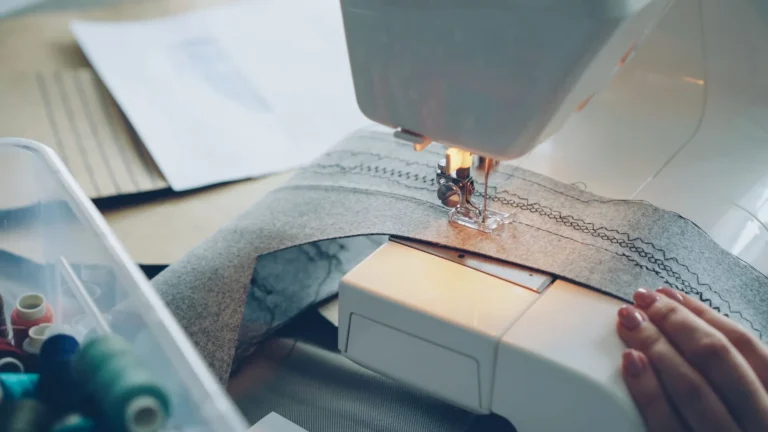
For sublimated performance wear, the design is printed digitally onto fabric panels, which are then cut, sewn and quality-checked per order. Once the production file is correct, making one piece or a hundred uses the same workflow.
The result is a minimum order quantity (MOQ) that can drop from hundreds of pieces per style to a single piece. Stock risk falls to close to zero.
How big is the sportswear overproduction problem?
It is large and well documented. The European Environment Agency estimates that 4% to 9% of all textile products placed on the European market are destroyed without ever being used. That destruction produces up to 5.6 million tonnes of CO2-equivalent emissions (EEA).
The same EEA analysis notes that about 20% of clothing bought online in the EU is returned. Around 70% of those returns are due to poor fit or style.
EU textile waste amounts to roughly 16 kg per person per year (EEA Circularity Metrics Lab). Sportswear, with its seasonal kits and custom club orders, contributes its share.
What does the EU ban on destroying unsold clothes mean for sportswear brands?
Since 19 July 2026, large companies in the EU have been prohibited from destroying unsold clothes, clothing accessories and footwear. The ban falls under the Ecodesign for Sustainable Products Regulation (ESPR) (European Commission).
- Who is covered: large companies now; medium-sized companies from 2030. Micro and small companies are currently exempt.
- What companies must do instead: sell, donate, or prepare unsold goods for reuse.
- Enforcement: records must be kept for five years, and national authorities can impose fines.
- Disclosure: a standard format for reporting discarded unsold goods applies from 2027 (European Commission).
For a sportswear brand, excess stock can no longer simply disappear. It must be stored, moved, discounted or donated, and all of that is visible and costs money. The cheapest unsold jersey is the one that was never made.
Is the industry really moving to smaller batches?
Yes. McKinsey’s State of Fashion 2026 describes an industry facing tariffs, volatile input costs and slow growth. It says AI is shifting “from a competitive edge to a business necessity” (McKinsey).
A summary of the report notes that inventory days rose 4% between 2023 and 2024. It also notes that brands exploring demand-led models are turning to suppliers who can produce smaller batches with fewer delays (Hertzman Global Intelligence).
Market estimates point the same way, although definitions vary:
- On-demand apparel manufacturing: about USD 5.8 billion in 2024, growing 9.6% a year (Growth Market Reports), or USD 6.2 billion in 2025, growing over 26% a year (Market Intelo).
- Print-on-demand (all categories): forecast to grow roughly 20–25% a year in several independent reports (Mordor Intelligence via GlobeNewswire; The Business Research Company).
The exact figures differ. The direction does not.
Why is sportswear especially suited to on-demand production?
- It is highly personal. Club crests, sponsor logos, names, numbers and event dates make much performance apparel custom by nature. A jersey printed for one club is worth almost nothing to anyone else.
- Demand is unpredictable. New members join mid-season, events sell out or don’t, and limited drops can go viral or fall flat.
- Sublimation is digital. Designs are printed from files, so small runs don’t require new screens or setups.
The limiting factor has never been whether on-demand makes sense. It has been whether factories could handle low volumes, and whether brands could produce correct, production-ready designs quickly.
How do Sportswear of Tomorrow and FLAVE remove those bottlenecks?
They are two separate companies, each solving a different part of the problem.
Manufacturing: Sportswear of Tomorrow. Sportswear of Tomorrow is a Romania-based B2B sportswear manufacturer, established in 2002 in Aiud, with Belgian management.
- Minimum order: teamwear and on-demand orders start from one piece. Volume discounts apply to larger collection runs, confirmed in your quote.
- Lead time: typically 2.5 to 4 weeks from artwork approval.
- Materials and printing: recycled polyester is standard, and sublimation is done in-house.
See how SoT works with low MOQs and its fabrics and sublimation options.
AI design and routing: FLAVE. FLAVE is an AI on-demand sportswear platform. According to FLAVE:
- Design: a user describes a design in plain language, and FLAVE’s AI generates four production-ready panel designs with mockups in under 45 seconds.
- Storefronts: branded storefronts let customers order directly.
- Production: orders are routed to a network of manufacturing partners that FLAVE says spans more than 300 production sites across Europe and Asia (flave.eu; WTiN).
Sportswear of Tomorrow is one of those manufacturing partners. It is the natural fit when a brand wants European cut-and-sew sublimated production. Read how the two companies work together.
What on-demand does and doesn’t mean
- It doesn’t mean overnight delivery. Cut-and-sew performance wear takes longer than printing a logo on a blank t-shirt. What changes is when the commitment is made: after the order, not months before.
- It doesn’t mean lower quality. Cycling bibs, triathlon suits and fitted jerseys still need proper patterns, consistent colours and reliable sizing. The manufacturing partner matters as much as the software.
- It does mean minimums of one for teamwear, and no warehouse full of unsold stock.
What comes next?
Large brands will feel the ESPR first, but the logic applies to everyone. A club ordering 40 jerseys “just in case” faces the same problem as a global brand with a warehouse of last season’s kit, only smaller. AI sportswear design, digital sublimation and low-MOQ European manufacturing now make a better model practical: design it, sell it, then make it.
Next in this series: how the SoT + FLAVE ecosystem works, from AI design to European production, and what no-minimum custom sportswear means for brands, clubs and creators.
Frequently asked questions
What is on-demand sportswear manufacturing?
It is a production model in which sportswear is made only after an order is placed, rather than produced in large batches in advance. For sublimated garments, each order is printed, cut and sewn individually, so minimums can drop to one piece.
Is it now illegal to destroy unsold clothing in the EU?
For large companies, yes. Since 19 July 2026, the EU’s Ecodesign for Sustainable Products Regulation prohibits large companies from destroying unsold clothes, clothing accessories and footwear, with limited exceptions. Medium-sized companies follow in 2030 (European Commission).
What is the minimum order at Sportswear of Tomorrow?
Teamwear and on-demand orders start from one piece, unless stated otherwise for a specific product. Volume discounts apply to larger collection runs, confirmed in your quote.
How long does on-demand sportswear production take at Sportswear of Tomorrow?
Typically 2.5 to 4 weeks from artwork approval. Always confirm the lead time for your specific order before promising delivery dates to your own customers.
Is FLAVE part of Sportswear of Tomorrow?
No. FLAVE is a separate company: an AI on-demand sportswear platform with a global manufacturing network. Sportswear of Tomorrow is one of FLAVE’s manufacturing partners, and the natural choice for European cut-and-sew sublimated production.
Does on-demand production reduce waste?
Yes. Garments are made only when there is a buyer, so there is no unsold stock to discount, store or destroy. That matters more now that the EU restricts the destruction of unsold clothing.
Want to explore European on-demand production? Contact Sportswear of Tomorrow. Want to design with AI and reach a global manufacturing network? Visit FLAVE.