Why B2B buyers are switching to on-demand sportswear — and not going back
Until recently, buying custom sublimated sportswear meant one thing: committing upfront. Fifty pieces per design, per colourway, per size run. You ordered what you thought you’d need, warehoused what you didn’t sell, and wrote off whatever expired with the season.
That model worked when sportswear brands had stable, predictable demand and long planning cycles. Today, neither of those things are true. Clubs rebrand. Sponsors change mid-season. Design iterations that used to happen once a year now happen quarterly. And no procurement manager wants to explain a stockroom full of last year’s kit to their finance director.
On-demand production — manufacturing custom sportswear to order, without minimum quantities — changes the economic logic of the whole category. And once B2B buyers experience it, most don’t go back to MOQ-based sourcing.
The real cost of MOQ-based sourcing
Procurement managers are trained to negotiate on unit price. But unit price is only one line in the true cost of a sportswear order. When you account for the full picture, MOQ-based sourcing is often more expensive than it appears.
Consider what a standard minimum-order cycle looks like in practice:
- You order 60 units to hit the minimum, but your client needs 38.
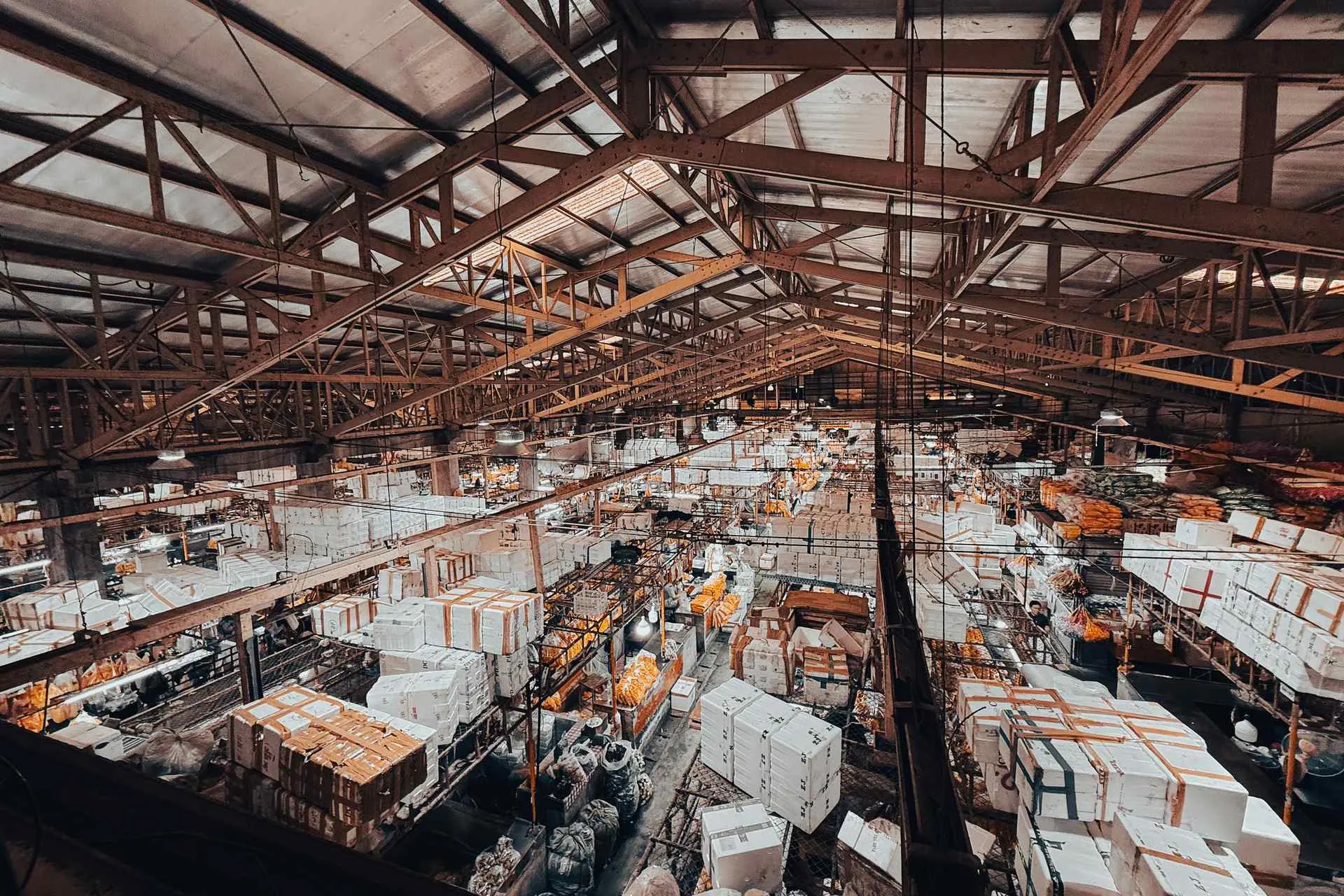
- The surplus 22 units go into storage — at a cost per square metre, per month.
- Six months later, the sponsor logo changes. The surplus is now obsolete.
- You absorb the write-off, or pass it to the client and damage the relationship.
Repeat this across three or four clients per season and the “cheaper” unit price from a MOQ-based supplier starts to look very different. The hidden costs — overstock, storage, write-offs, reorder friction — are real and they compound.
On-demand production eliminates this entirely. You order exactly what your client needs. If they need 12 pieces for a rowing squad or 180 for a cycling federation, the production run matches the requirement — not the manufacturer’s convenience.
What’s changed in on-demand manufacturing
On-demand production used to mean slower turnaround, lower quality, and limited design capability. That was true fifteen years ago. It’s no longer accurate.
Advances in dye-sublimation printing, digital pattern cutting, and production workflow software have closed the quality gap entirely. Custom sublimated sportswear produced in single units today is indistinguishable — in fabric, colour accuracy, and finish — from garments produced in runs of 500.
What’s changed on the commercial side is equally significant. European manufacturers who invested early in on-demand infrastructure now run production systems designed to handle variable-volume orders efficiently. Lead times of 3–4 weeks from artwork approval are standard. Dropship fulfilment — shipping individual orders directly to end recipients — is a core capability, not an exception.
For B2B buyers managing multiple client accounts, this opens up a fulfilment model that simply wasn’t available before: produce on order, ship to the end user, carry zero inventory.
How on-demand changes the B2B service model
The shift to on-demand production isn’t just about cost. It changes what B2B buyers can offer their own clients.
Faster iteration cycles
When there’s no minimum order, design changes don’t require a full production commitment. A cycling club can test a new colourway with five jerseys before rolling it out to the whole squad. A brand can produce a limited sponsor edition without betting on demand. The risk of each design decision drops to near-zero.
Mid-season reorders without penalty
New members join clubs mid-season. Sponsors are added after the initial run. Athletes need replacements. With MOQ-based production, each of these situations is a negotiation. With on-demand manufacturing, it’s simply another order — same price, same quality, same turnaround.
Dropship as a differentiator
B2B buyers who manage kit programmes for large clubs or federations are increasingly offering dropship fulfilment as a premium service — members order their own sizes online, production happens per-order, and garments ship directly to the individual. No club treasurer handling a bulk delivery. No size-swap headaches. This model is only possible with an on-demand production partner behind it.
MOQ vs on-demand: a direct comparison
| Factor | MOQ-based supplier | On-demand (Sportswear of Tomorrow) |
|---|---|---|
| Minimum order | Typically 50–100 units per design | 1 unit — no minimum |
| Overstock risk | High — buyer absorbs surplus | Zero — produce exact quantities |
| Design changes | Require new minimum commitment | No extra commitment — reorder at any quantity |
| Mid-season reorders | Often require hitting minimum again | Any quantity, same terms |
| Dropship fulfilment | Rarely supported at unit level | Core capability — ships to individual recipients |
| Turnaround time | 4–14 weeks (varies by region) | 3–4 weeks from artwork approval (European production) |
| Manufacturing location | Often Asia — import duties, longer transit | Romania — EU production, no import friction |
| Sample turnaround | Weeks for a physical sample | 3D digital mockup in 24 hours |
Why European manufacturing matters for B2B buyers
Sourcing from Asian manufacturers has become more complex. Import duties, extended lead times, quality control challenges on production batches, and communication friction across time zones are all factors that add operational cost — often invisible in the unit price but very visible in the working day.
European production offers a different risk profile. No import duties within the EU. No six-week transit times. Quality issues resolved in the same production cycle, not the next one. And a sales and design team operating in your time zone, responding within the business day.
For B2B buyers managing client relationships where delivery reliability is part of the service promise, this is not a minor consideration.
What to look for in an on-demand sportswear partner
Not all on-demand suppliers are equivalent. When evaluating a partner for B2B custom sportswear production, the questions that matter most are:
- Is on-demand production their core model, or an add-on? Some suppliers accept small orders but aren’t operationally optimised for them. Production systems designed for bulk runs produce different results at low volumes.
- Can they handle multiple simultaneous designs? B2B buyers typically manage several client accounts at once. A supplier who treats each design as a separate negotiation adds friction.
- What does their design-to-production workflow look like? A 24-hour mockup turnaround and unlimited revisions before production approval are the baseline for a serious on-demand partner.
- Is dropship fulfilment a native capability? Dropshipping from a bulk warehouse is very different from producing per-order and shipping individually. Ask specifically how it works.
- What’s their track record? On-demand production for sportswear requires deep supply chain investment. Look for manufacturers with years — not months — in this model.
At Sportswear of Tomorrow, we’ve been operating a pure on-demand model for over 22 years. No minimum orders has never been a marketing claim — it’s how our production system is built.
The shift is already happening
The B2B buyers who moved early to on-demand sourcing have a structural advantage: they can offer clients something their MOQ-dependent competitors can’t. Flexible quantities. Faster iterations. Dropship programmes. Reorders without renegotiation.
The buyers still defending the old model are defending it to clients who are increasingly aware that the constraint is the supplier’s, not an industry reality.
On-demand production is not a niche capability for small orders. It’s a sourcing model that scales from one piece to thousands — and it’s available now, from a European manufacturer, with a 48-hour quote turnaround.
Get a no-MOQ quote for your next B2B order
Send us your brief — client sport, quantities, any design references — and we’ll come back with a full quote within 48 hours. No commitment required. No minimum order.
Request a quote →